
Full & Partial Dentures in Mocksville, NC
Missing teeth can affect much more than the appearance of your smile. They may make it harder to chew certain foods, speak comfortably, and feel confident in everyday situations. At Rivers Family & Cosmetic Dentistry, Dr. Andrew Rivers provides full and partial dentures in Mocksville, NC, with treatment planned around your oral health, remaining teeth, function, and personal goals.
Dentures are removable prosthetic teeth designed to replace several missing teeth or an entire arch of teeth. Partial dentures replace missing teeth while preserving healthy natural teeth, while full dentures replace all teeth in the upper arch, lower arch, or both.
If you are considering replacing missing teeth, call (336) 753-2823 to arrange a consultation at our office at 781A Valley Rd., Mocksville, NC 27028.
What Are Dentures?
Dentures are custom-made dental prostheses used to replace missing teeth and surrounding tissues. They can restore the visible portion of your smile while helping you chew, speak, and maintain facial support.
The right type of denture depends largely on how many teeth you are missing, where those teeth are located, the condition of your remaining teeth and gums, and your expectations for treatment.
At Rivers Family & Cosmetic Dentistry, Dr. Rivers evaluates these factors before recommending a tooth-replacement plan.
What Are Full Dentures?
Full dentures, also called complete dentures, are designed for patients who are missing all of the natural teeth in the upper jaw, lower jaw, or both.
The denture consists of artificial teeth positioned in a gum-colored base. The prosthesis rests over the gums and underlying oral structures. Fit, bite, appearance, and function are considered when planning the restoration.
Some patients already have no remaining teeth when they seek treatment. Others may have severely compromised teeth that need to be evaluated before a full denture can be considered. When removal of failing teeth is necessary, Dr. Rivers can discuss tooth extractions and how healing may affect the overall denture timeline.
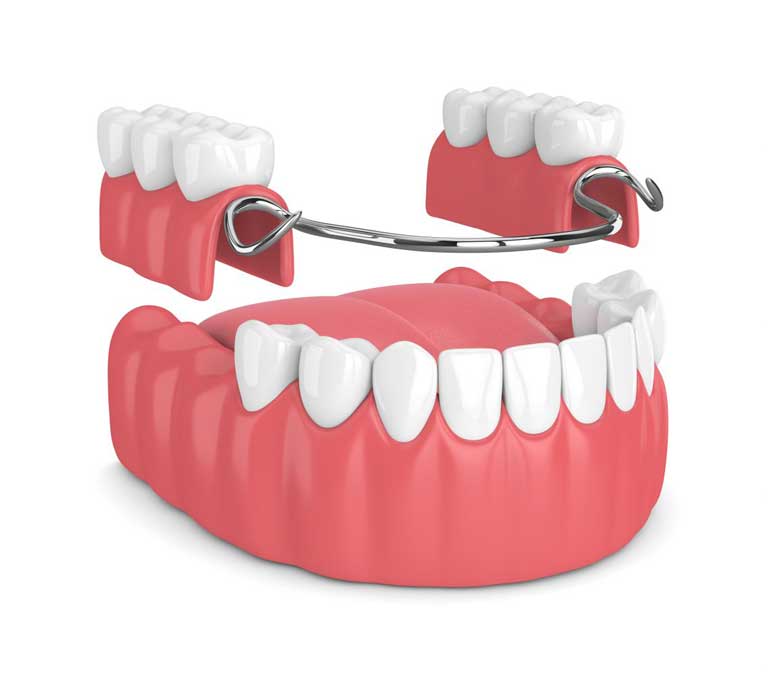
What Are Partial Dentures?
Partial dentures may be appropriate when you are missing several teeth but still have healthy natural teeth worth preserving.
A partial denture fills the spaces created by missing teeth and uses the remaining oral structures for support and retention. Unlike a complete denture, it is specifically designed to work around the natural teeth that remain.
For patients in Mocksville with scattered areas of tooth loss, a partial denture can provide a practical way to replace multiple teeth without necessarily replacing every missing tooth individually.
Full Dentures vs. Partial Dentures
The main difference between full and partial dentures is the number of natural teeth remaining.
A full denture replaces an entire arch of teeth. A partial denture replaces only the missing teeth and works alongside the patient’s remaining natural teeth.
Choosing between them is not simply a matter of preference. Dr. Rivers considers the health and prognosis of your remaining teeth, gums, bite, location of missing teeth, functional needs, and long-term restorative goals.
If healthy teeth can predictably remain, preserving them may influence the treatment plan. If the remaining teeth have a poor prognosis, a different approach may need to be discussed.

Benefits of Replacing Missing Teeth With Dentures
Tooth loss affects patients differently, but replacing missing teeth can provide important functional and cosmetic benefits.
Well-planned dentures may help:
- Restore the appearance of missing teeth
- Improve the ability to chew a wider range of foods
- Support clearer speech after the adjustment period
- Restore support to the lips and cheeks
- Improve confidence when smiling and interacting with others
- Replace several or all missing teeth with one prosthetic solution
- Provide a removable tooth-replacement option
- Improve function compared with leaving extensive spaces untreated
Dentures also allow treatment to be tailored to the extent of tooth loss. A patient missing a few teeth has very different restorative needs from someone who has lost an entire arch.
Who Is a Good Candidate for Dentures?
Dentures may be considered for adults who have lost several or all of their teeth and want a removable tooth-replacement solution.
Potential candidates include people who:
- Have multiple missing teeth
- Have lost all teeth in one or both arches
- Have remaining teeth that require careful evaluation
- Want to restore chewing and smile appearance
- Prefer a removable restoration
- Are willing to clean and maintain their prosthesis
- Can attend follow-up visits for adjustments and ongoing dental care
Age alone does not determine whether someone needs dentures. The decision should be based on oral health, tooth loss, function, anatomy, and individual treatment goals.

Who May Not Be a Good Candidate for Traditional Dentures?
Traditional dentures are useful for many patients, but they are not automatically the best solution for every case.
Untreated oral disease may need to be addressed before a denture is made. Patients with remaining teeth should also have those teeth evaluated to determine whether they can predictably support a partial denture or should receive another form of treatment.
Expectations matter as well. A removable denture does not function exactly like healthy natural teeth. Patients seeking greater stability may want to discuss whether an implant-based solution is appropriate.
A comprehensive examination is the best way to determine which approach makes sense for your mouth rather than choosing a restoration based on appearance or price alone.
The Denture Process at Rivers Family & Cosmetic Dentistry
The exact process varies according to your oral condition and whether you need a partial or complete denture. Treatment generally involves several stages.
1. Comprehensive Dental Evaluation
Dr. Rivers begins by examining your mouth, remaining teeth, gums, bite, and areas of tooth loss. Your concerns and expectations are also important parts of treatment planning.
This evaluation helps identify conditions that should be addressed before the final prosthesis is made.
2. Choosing the Appropriate Tooth-Replacement Option
Dentures are one option rather than the only solution for missing teeth.
Depending on the location and number of missing teeth, your options may include a partial denture, complete denture, bridge, or implant-based treatment. The goal is to choose a restoration suited to your oral health, priorities, and circumstances.
3. Measurements, Impressions, and Planning
Creating a denture involves collecting information about the shape of your mouth and how your upper and lower jaws relate to one another.
Treatment planning also considers the appearance and position of the replacement teeth. These details influence comfort, function, speech, bite, and the overall appearance of the finished smile.
4. Denture Fabrication
Information gathered during treatment planning is used to create the customized prosthesis.
Rather than treating dentures as a one-size-fits-all appliance, attention is given to the individual patient’s mouth, tooth replacement needs, and smile.
5. Fitting and Adjustments
When the denture is delivered, its fit and bite are evaluated. Some adjustment is normal as you begin wearing a new prosthesis.
Pressure areas or changes in how the teeth meet can sometimes require additional adjustments. Patients should contact the dental office when persistent soreness or fit problems develop rather than trying to alter the denture themselves.
6. Follow-Up and Long-Term Care
Receiving dentures does not eliminate the need for dental care.
Your gums and other oral tissues still require monitoring, and patients with partial dentures must carefully protect their remaining natural teeth. Periodic examinations also allow Dr. Rivers to evaluate changes in denture fit and function.
How Long Does It Take to Get Dentures?
There is no single denture timeline that applies to every patient.
Someone who has already lost their teeth may have a different treatment sequence from a patient who requires preparatory dental care or extractions. Healing, the type of denture, the number of arches being restored, fabrication stages, and necessary adjustments can all influence the total timeline.
During your consultation, Dr. Rivers can explain the anticipated sequence based on your individual condition.
Adjusting to New Dentures
New dentures typically require an adjustment period. Even a carefully made prosthesis is different from natural teeth, and the lips, cheeks, tongue, and chewing muscles need time to adapt.
Early on, you may notice that the denture feels more prominent in your mouth than expected. Speaking and eating can also feel different.
Minor areas of irritation may occur as you begin using the prosthesis. Persistent sore spots, instability, or bite problems should be evaluated professionally. Follow-up adjustments can be an important part of successful denture treatment.
Eating With New Dentures
Learning to chew with dentures takes practice. During the initial adjustment period, softer and easier-to-manage foods can help you become accustomed to your new bite.
Cutting food into smaller pieces and chewing carefully can also make the transition easier. As your comfort and control improve, you may gradually expand your food choices according to your dentist’s recommendations.
Dentures can improve chewing compared with extensive untreated tooth loss, but patients should understand that removable prosthetic teeth do not reproduce the exact chewing efficiency of healthy natural teeth.
Speaking With Dentures
Speech may temporarily sound or feel different when you first receive dentures because your tongue must adapt to the contours of the prosthesis.
Practicing commonly difficult words and reading aloud can help some patients become accustomed to speaking with their new teeth. Many initial speech changes improve as the mouth adapts.
Persistent speech problems or denture movement should be discussed during a follow-up visit.
How to Care for Full and Partial Dentures
Good denture hygiene helps protect both the prosthesis and your oral tissues.
Follow the cleaning and storage instructions provided for your particular restoration. Dentures should be handled carefully because they can be damaged if dropped or cleaned improperly.
Patients with partial dentures must pay particular attention to their remaining natural teeth and gums. Plaque around supporting teeth can contribute to decay and periodontal problems.
Even patients with complete dentures benefit from ongoing general dentistry care because professional examinations can identify changes involving the gums, oral tissues, bite, and prosthesis.
How Long Do Dentures Last?
Dentures are not lifetime restorations.
The materials can wear, but another important consideration is that your mouth changes over time. The gums and underlying jaw can change after tooth loss, which can gradually alter how a denture fits.
Depending on the situation, a denture may eventually require an adjustment, repair, reline, rebase, or replacement. A denture that once fit comfortably but has become loose should be professionally evaluated rather than routinely relying on temporary solutions.
Regular examinations allow changes to be identified before they cause larger functional problems.
How Much Do Dentures Cost in Mocksville, NC?
The cost of dentures varies because treatment is individualized. A meaningful estimate requires knowing what type of prosthesis you need and whether other dental treatment is necessary first.
Factors that can influence cost include:
- Full versus partial dentures
- Upper, lower, or both arches
- Denture materials and design
- Number and condition of remaining teeth
- Preparatory dental treatment
- Extractions when clinically necessary
- Complexity of the case
- Follow-up treatment or future maintenance
- Applicable dental insurance benefits
Rather than assuming that the least expensive option will provide the best long-term value, patients should compare the expected function, maintenance, treatment requirements, and longevity of their available choices.
Rivers Family & Cosmetic Dentistry can provide treatment-specific information after evaluating your mouth.
Risks and Limitations of Dentures
Dentures can significantly improve life with missing teeth, but understanding their limitations is an important part of making an informed treatment decision.
Potential considerations include:
- An initial adjustment period
- Temporary changes in speech
- Gum irritation or pressure areas
- Movement during chewing in some cases
- Lower chewing efficiency than healthy natural teeth
- Changes in fit as the mouth changes
- Ongoing cleaning and maintenance
- Possible repairs, relines, or replacement
- Continued need for dental examinations
Traditional dentures also do not eliminate the natural changes that can occur in the jaw following tooth loss.
A realistic discussion of these limitations allows patients to compare dentures with other tooth-replacement treatments.
Dentures vs. Dental Implants
Dentures and implants can both replace missing teeth, but they do so differently.
Traditional dentures are removable and rest on oral tissues and supporting structures. Dental implants are placed in the jawbone and can support different types of tooth restorations.
Implant treatment involves additional considerations, including bone availability, general and oral health, surgical treatment, healing time, maintenance, and cost. For suitable patients, implant-supported restorations may offer greater stability than conventional removable dentures.
Patients interested in a more stable replacement option can learn about dental implants and discuss whether implant treatment is appropriate for their situation.
Neither approach is universally better. The appropriate choice depends on your anatomy, health, number of missing teeth, preferences, treatment goals, and budget.
Partial Dentures vs. Dental Bridges
A partial denture and a bridge can both replace missing teeth, but a conventional partial denture is removable while a bridge is generally a fixed restoration.
The location and number of missing teeth are important. A fixed bridge requires an appropriate treatment situation and suitable support. A partial denture may be able to replace teeth across different areas of an arch.
Patients with a suitable gap can explore dental bridges as another restorative option.
Dr. Rivers can compare the advantages, limitations, maintenance requirements, and expected function of each approach based on your specific pattern of tooth loss.
Alternatives to Traditional Dentures
The best tooth-replacement plan depends on what remains healthy in your mouth.
Dental implants may be considered for patients seeking an implant-based replacement option and who meet the necessary clinical requirements.
Dental bridges may be appropriate for certain spaces when suitable support is available.
In other situations, preserving healthy natural teeth and combining restorative approaches may make more sense than automatically moving toward a complete denture.
A personalized evaluation helps answer the more useful question: not simply “What replaces missing teeth?” but “Which replacement method best fits my mouth and priorities?”
Why Choose Rivers Family & Cosmetic Dentistry for Dentures?
Rivers Family & Cosmetic Dentistry provides restorative and family-oriented dental care from its office at 781A Valley Rd. in Mocksville, North Carolina.
Dr. Andrew Rivers received his dental education at the UAB School of Dentistry after completing his undergraduate studies at Southern Methodist University. The practice emphasizes comprehensive care, preventive dentistry, patient comfort, and modern dental technology.
Patients considering dentures can meet Dr. Andrew Rivers and learn more about the practice’s approach before their visit.
Because tooth replacement is connected to the health of the entire mouth, a comprehensive dental practice can evaluate not only the missing teeth but also the gums, remaining teeth, bite, and future restorative needs.
Dentures for Mocksville and Davie County Patients
Our office serves patients seeking dentures and other restorative dental services in Mocksville, NC, and surrounding Davie County communities.
Our Mocksville location may also be convenient for patients coming from areas such as Advance, Bermuda Run, Cooleemee, Farmington, and nearby communities who are exploring options for replacing multiple or all missing teeth.
Rivers Family & Cosmetic Dentistry is located at 781A Valley Rd., Mocksville, NC 27028, in a stand-alone office accessible from major local roads.
Restore Your Smile With Full or Partial Dentures
Living with multiple missing teeth does not mean every patient needs the same solution. A detailed dental evaluation can determine whether a full denture, partial denture, bridge, implant-based treatment, or another restorative plan best meets your needs.
If you are considering full or partial dentures in Mocksville, NC, call Rivers Family & Cosmetic Dentistry at (336) 753-2823 or schedule an appointment to discuss your tooth-replacement options with Dr. Andrew Rivers.
Frequently Asked Questions About Dentures
How much do dentures cost in Mocksville, NC?
Denture costs vary according to whether you need a full or partial denture, one or both arches, the restoration’s design, and whether preparatory treatment is required. Dental insurance benefits may also affect out-of-pocket costs. After examining your mouth, Rivers Family & Cosmetic Dentistry can discuss the recommended treatment and associated costs.
What is the difference between full and partial dentures?
A full denture replaces all teeth in an upper or lower arch, while a partial denture replaces selected missing teeth and works alongside natural teeth that remain. Which option is appropriate depends on the number of missing teeth and the health and long-term prognosis of the remaining teeth.
How long does it take to get dentures?
The denture timeline varies by patient. Treatment may require examinations, impressions or measurements, planning, fabrication, fitting, and adjustments. Patients who need extractions or other preparatory treatment may require additional healing time. Dr. Rivers can provide a more individualized timeline after evaluating your teeth, gums, and restorative needs.
How long do dentures last?
There is no exact lifespan that applies to every denture. Materials experience wear, and the gums and jaw can change over time after tooth loss. These changes may eventually affect fit and function. Regular dental evaluations help determine whether a denture needs adjustment, repair, relining, or replacement.
Are dentures safe?
Dentures are a widely used method of replacing missing teeth when appropriately planned and maintained. They do have limitations, including possible irritation, movement, and changes in fit over time. Proper hygiene, professional adjustments, and ongoing dental examinations are important for maintaining healthy oral tissues and comfortable function.
Can I sleep with my dentures in?
Whether and when dentures should be removed overnight depends on the prosthesis and your dentist’s instructions. Oral tissues generally require appropriate care and hygiene, and dentures must be cleaned properly. Follow the individualized wearing, cleaning, and storage recommendations provided by your dentist rather than establishing your own overnight routine.
How do I know if I need full dentures or partial dentures?
The decision depends primarily on how many teeth are missing and whether the remaining teeth are healthy enough to preserve. Full dentures replace an entire arch, while partial dentures work around remaining natural teeth. A dental examination is necessary to assess tooth prognosis, gums, bite, and the available restorative options.
Schedule a Denture Consultation in Mocksville, NC
If missing teeth are affecting your smile, chewing, speech, or confidence, learn which replacement options may be appropriate for you. Rivers Family & Cosmetic Dentistry welcomes patients from Mocksville and surrounding Davie County communities.
